
How much does a tap cost?
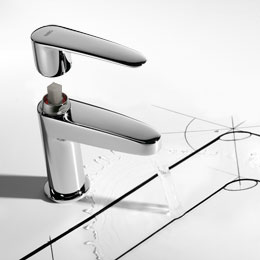
The tap on the inside. Discover its parts and what features make it more resistant.
Imagine that you are in a showroom or a tapware shop. In front of you is a display with different models of taps. You have to choose one, but you don’t know which, and a thousand questions spring to mind. You know that design is crucial, but what else must be considered when buying tapware? What parts are found inside? What characteristics make them last longer? What model will be the most resistant? What materials are used? What features make for a good tap? What is it that costs money in a tap?
These are some of the questions that everyone has when they’re about to choose kitchen or bathroom tapware. We have prepared some answers that you’ll find helpful when choosing the insides and outsides of the best taps for your home.
Prices vary according to the quality of the material used and the range. You must also take into account the thickness of the material used, the finish and the type of cartridge. Whether they are for the kitchen, bathroom or outdoors, decorative or industrial, brass or plastic, all taps have the same internal structure: a mouth or spout, a body containing the valve and the handle (or lever) that activates the system. There is a variety of sizes, shapes and finishes to choose from, depending on the use and style you prefer or need.
MATERIALS
For decades, brass, a copper-zinc alloy, has been one of the most commonly used materials for tapware. It is a very hard, yet ductile material, which makes it malleable and easy to handle. It is also very rust resistant. It can have a shiny chrome finish or be painted in different colours (white, black, red, etc.). Stainless steel is another option, but it can be more expensive than brass and offers similar technical properties. The most inexpensive taps are made from low-quality brass with a high lead, low copper content.
FINISH / QUALITY
You can select from among different finishes for bathroom or kitchen tapware. The most common are stainless steel, which is easy to maintain and is resistant to corrosion, and chrome plating, an electrolytic chrome finish on top of brass, which is shinier than stainless steel and has a long useful life. Other options are bronze, copper and nickel, as well as white, black and coloured finishes.
Most companies in the tapware sector have outsourced their manufacturing to China, closing their factories in Spain and the rest of Europe. The current conditions in the Asian giant have changed noticeably; wages are not what they used to be and some European factories that wish to move back do not have the resources to do so. Just the opposite, companies that have remained in Europe have managed to increase their quality, efficiency and automation.
THICKNESS / PRICE
The final price and the quality of the tapware vary according to the amount of material included in the product. There are models made with large tubes that weigh more than other shorter, smaller ones. Your choice of model will be based on the bathroom space you have and the style or ambiance you wish to create. Another aspect that determines the price is the production process and the time invested in the finishes (if they are automated or done by hand).
CARTRIDGE
The internal tap mechanism consists of a cartridge with two extremely hard ceramic disks that slide smoothly, one on top of the other. The greater the quality, the better the performance and duration. There are different qualities of ceramic cartridges: the best extends the life of the tapware, while low-quality cartridges cause frequent system malfunctions and must soon be replaced. This is why it is important to detect and stay away from models with varying levels of quality, for example, those that use cartridges with poor quality parts or from different origins.
WARRANTY
It must be kept in mind that high-performance tapware must be certified by the responsible official bodies (for example, N from Aenor, ACS and NF), which use the strictest safety standards to control and audit production processes on a regular basis, ensuring that European standards are met, year after year. This is the best guarantee to ensure that the brand will provide a satisfactory response to your claim in the event of any problem.
 |
Tres Comercial, S.A. Calle Penedès, 16-26 (Zona Industrial Sector A) 08759 Vallirana (Barcelona) Tel. (+34) 936834004 Fax: (+34) 936835061 www.tresgriferia.com |